PICTURE THIS
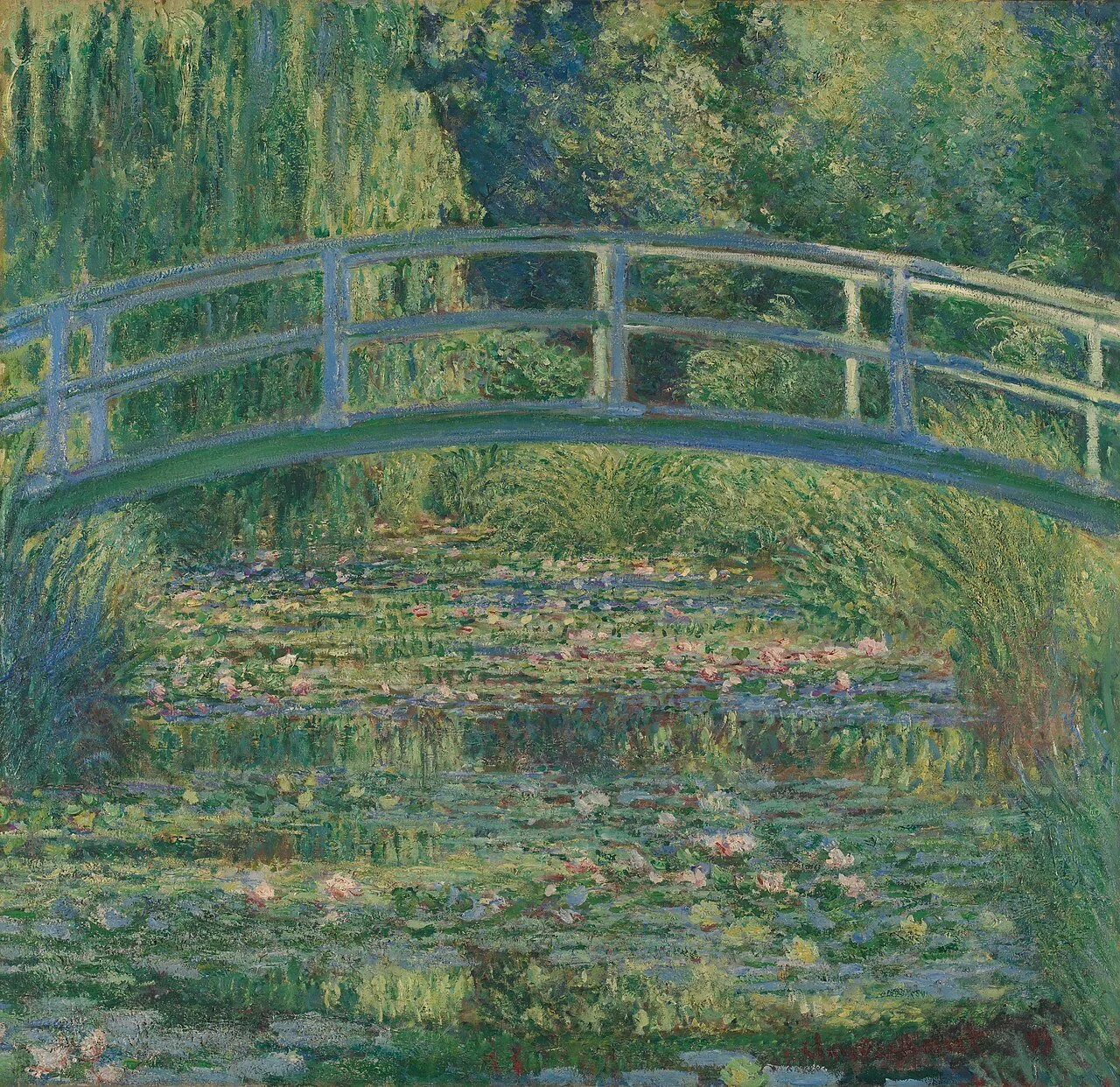
You’re strolling through a museum gallery. You look great, your date looks great, and things are going great. Suddenly, you stop in front of a massive blurry canvas of a lily pond. Your date leans in, looks at you, and whispers, “I just love how Manet captured the light here.”
Here comes the internal panic. Do you correct them? Are you the one who is wrong? Is a lily pond a Manet or a Monet? Are they not the same? Mo-nay or Ma-nay? Your heart rate spikes. This is high-stakes! The romantic vibe is on the edge of the cliff.
Take a deep breath. We’ve got you covered. If you want to absolutely dazzle your date (or at least survive through the nineteenth-century French wing without accidentally gaslighting each other), you need to master the ultimate art-world cheat code.
THE GREAT IMPRESSIONIST IDENTITY CRISIS
Claude Monet and Édouard Manet are probably the easiest artists to confuse by name and some of the easiest to separate by sight. Both painted nineteenth- century France and rejected the perfectly finished look of academic painting, but they were chasing completely different things. Monet wanted to capture what an environment looked like at one specific instant, before the sunlight, weather, or reflection changed. Manet was much more interested in the people and tensions of modern life.
Look at Monet’s Impression, Sunrise (1872) beside Manet’s Olympia (1863). Monet gives us a harbor dissolving into mist. Manet gives us a woman staring directly back.
THE MONET GIVEAWAY: THE SOFT SHIMMER
Monet rarely lets an outline stay completely still. In his Water Lilies paintings, the pond becomes patches of green, blue, violet, and reflected light until it is difficult to tell where the water ends and everything else begins. That softness is the giveaway. Monet paints the sensation of seeing something, not every physical detail of the thing itself.
CLUE #1: THE ART OF REPETITION
Another clue is repetition. Monet would paint the exact same subject again and again because the subject was never really the point; changing light was. His Rouen Cathedral series shows the cathedral under different weather and times of day, transforming the same stone façade from pale blue to gold, pink, and shadow. The architecture barely changes, yet each painting feels different. That obsession appears everywhere in Monet: haystacks, bridges, rivers, gardens. If the canvas feels atmospheric, outdoors, and almost temporarily caught between one kind of light and another, Monet should be your first guess.
THE MANET GIVEAWAY: THE STAGED CONFRONTATION

Le Déjeuner sur l’herbe (1863)
Manet does almost the opposite. In Le Déjeuner sur l’herbe (1863), the figures remain sharp against their surroundings, and the strange social situation becomes impossible to ignore. A Bar at the Folies-Bergère (1882) does the same through a barmaid standing directly before us. His paintings often feel flatter, darker, and more staged than Monet’s, with strong blacks and figures that hold their ground instead of dissolving into atmosphere.
YOUR CHEAT SHEET FOR THE FRENCH WING:
So forget the names for a second. If you notice light before people, think Monet. If you notice people before light, think Manet. Monet’s world shimmers; Manet’s confronts. Monet makes Rouen Cathedral feel temporary because sunlight can completely remake it. Manet can make a single stare feel permanent. One paints the moment as it changes. The other catches the moment when it gets uncomfortable.
