Did you notice something during Rosalía’s LUX concert run? Whether you are a Motomami or an angel, perhaps you noticed Rosalía's use of classical, fine, and eternal masterpieces in her sets.
I bet anyway, you love Rosalía’s “La Perla,” a song she sings to an ex or a former lover, calling them a “playboy,” “emotional terrorist,” and a “ladrón de paz” (or “peace stealer”). Many Rosalía fans speculate it was about her ex-fiancé, Rauw Alejandro, but we’re not here to talk about that. We’re here to talk about perhaps a costume inspiration from the famed Venus de Milo, in the Louvre.
Notice anything?
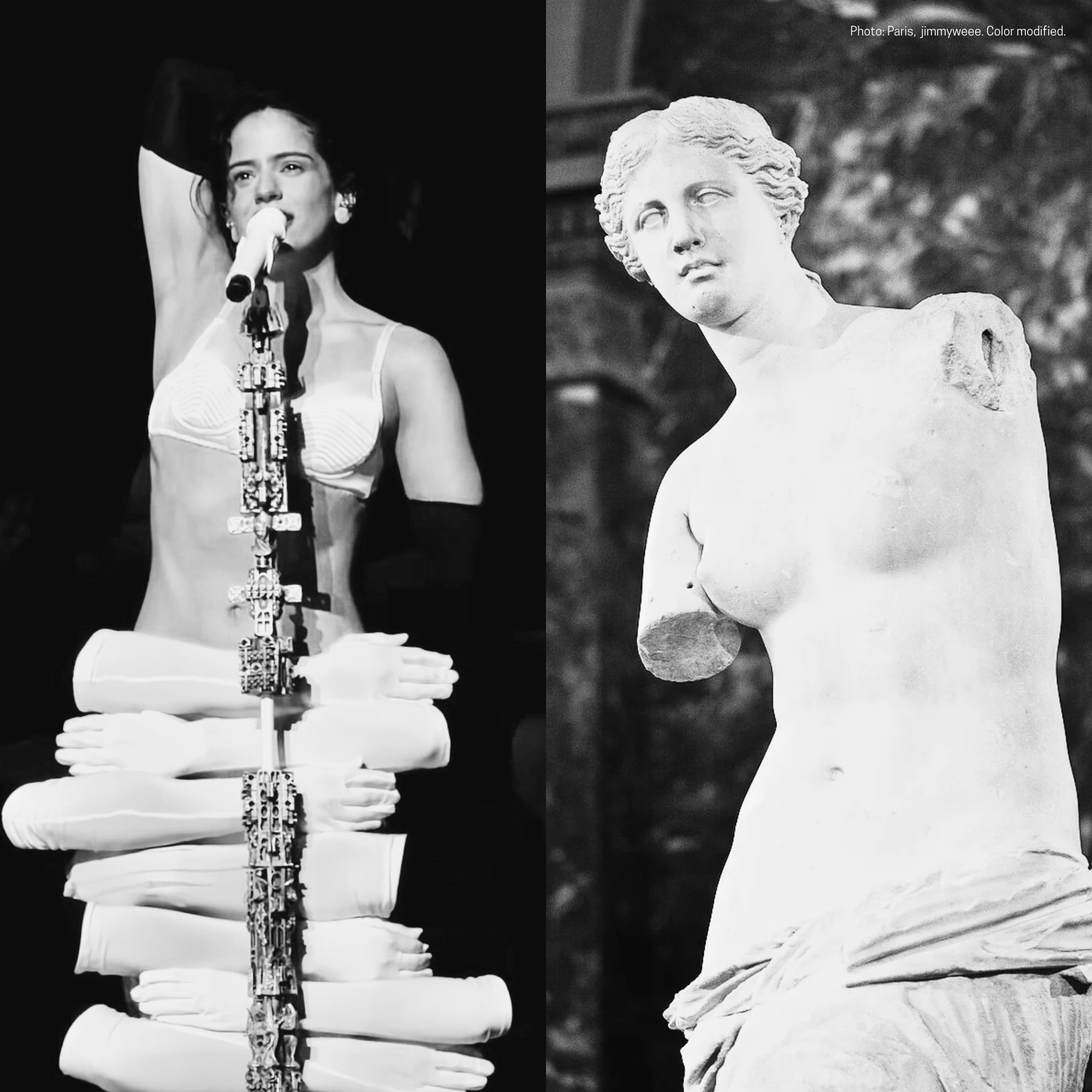
A little backstory on Venus de Milo:
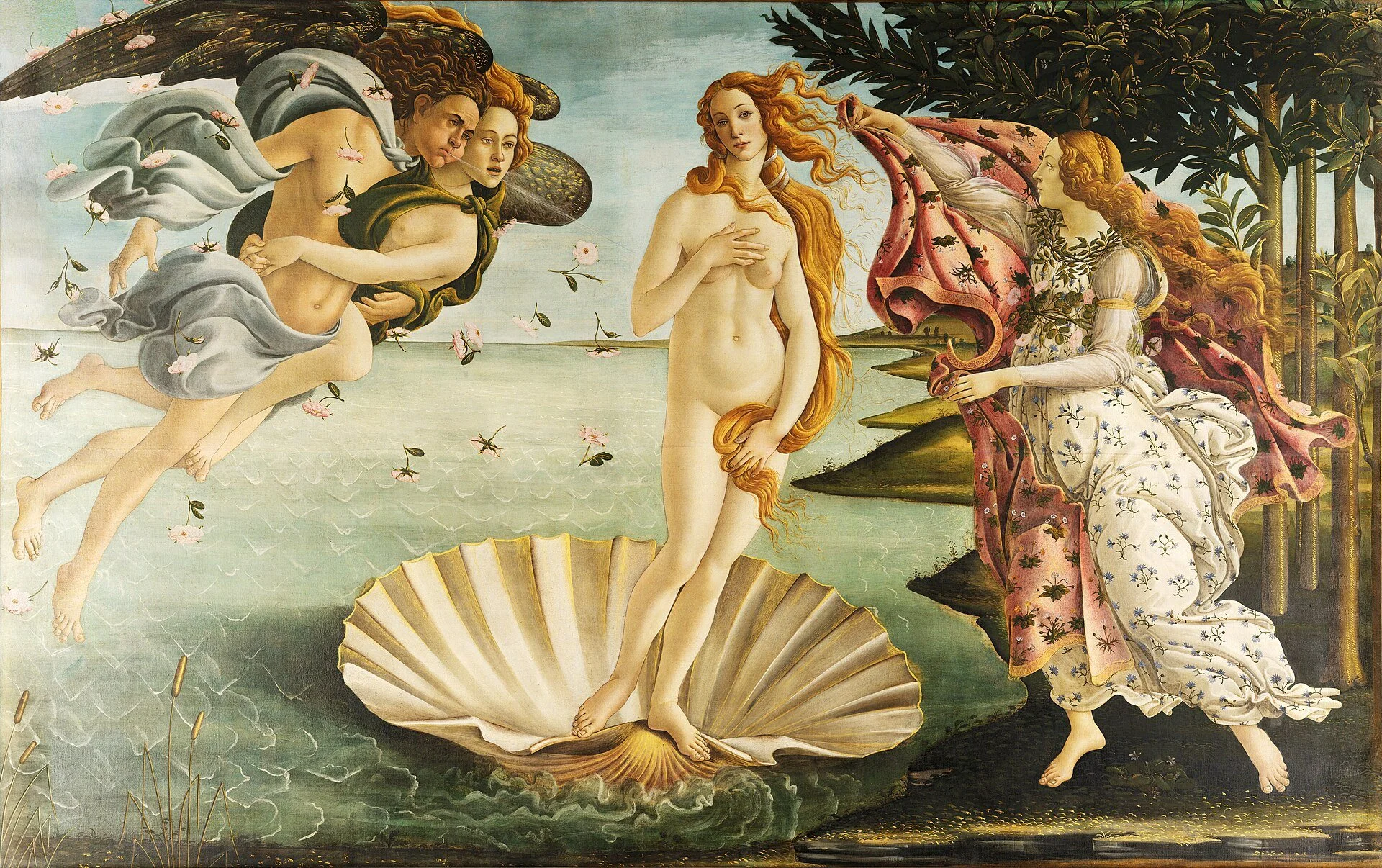
Painting by Sandro Botticelli: La nascita di Venere
The famed statue is widely believed to represent Aphrodite, the Greek goddess of love, beauty, and desire.
The most breathtaking and defining feature of this statue is probably her missing right and left arms. Perhaps representing today, the idea that Venus is a symbol of incomplete beauty, but still able to be admired by millions. Perhaps it represents the unattainability of absolute perfection. Maybe it’s the fragility of the human body and the history of our civilization.
Or maybe, it’s a symbol of the inability to feel, embrace, and reciprocate love. Perhaps vulnerability. A need for self-protection.
Connections to “La Perla:”
When Rosalía sings to this “playboy,” she describes someone who is flawless on the outside. Think of one of those vases in art museums, wrapped in white and gold glaze in intricate patterns. Everyone takes a photo. But inside? He’s hollow just like that artifact.
And Rosalía dresses herself as Venus. By turning into an armless goddess, she uses that “hollowness” as a weapon of self-defense.
If her ex is a hollow artifact, unable to show real depth, being soft and vulnerable will only get her hurt again. By adapting the anatomy of Venus de Milo onto herself, leaving only her inner core without her “arms” to go out and embrace him, she tells us that she’s now untouchable.
