La Maison du pendu
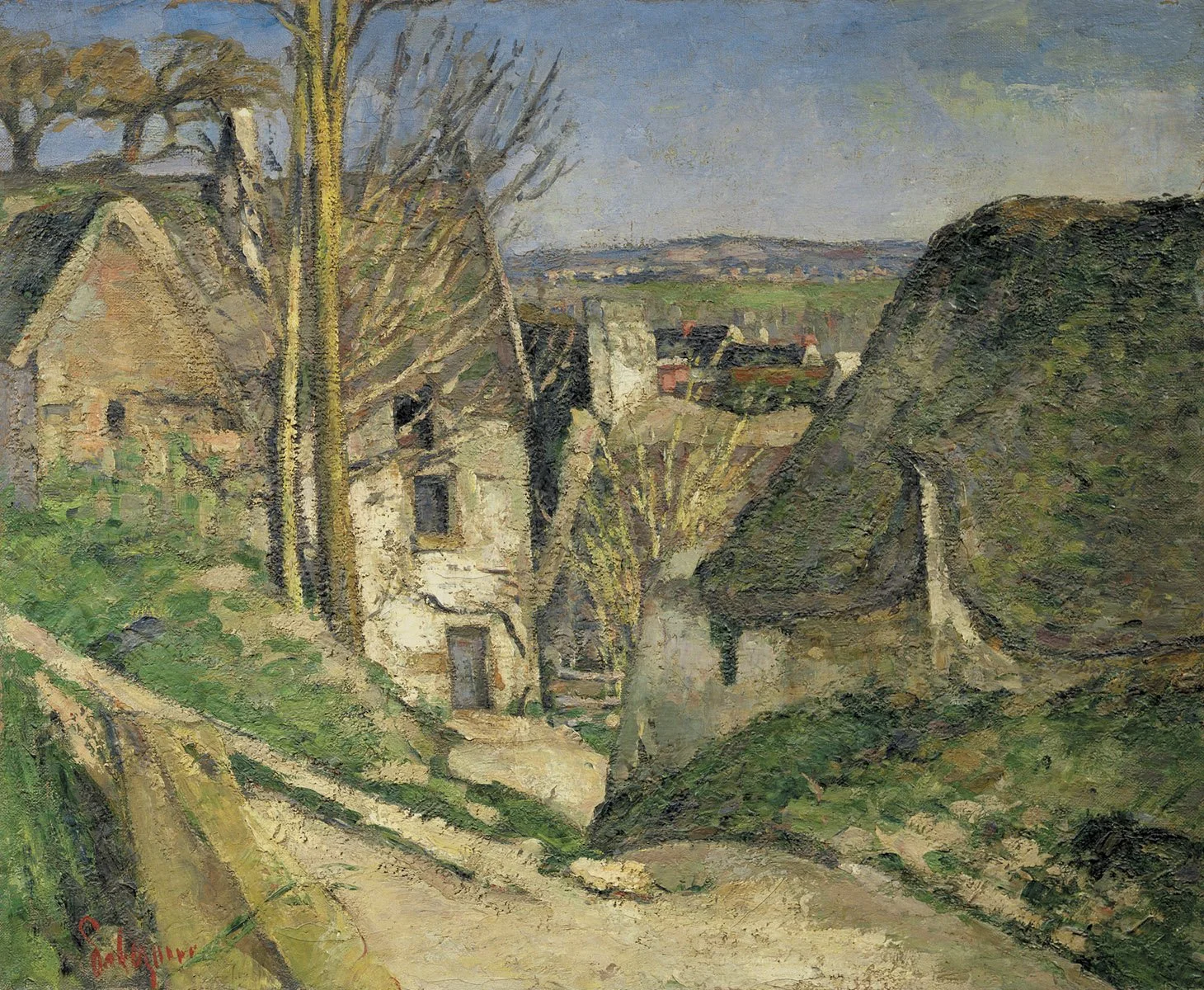
Paul Cézanne, La Maison du Pendu (1873). Oil on canvas, 55.5 x 66.3 cm. Musée d’Orsay, Paris. Image courtesy of Wikimedia Commons (Public Domain).
At first glance, the scene looks like a peaceful village landscape in Auvers-sur-Oise. Looking closer, the painting becomes a commentary on modern isolation and mental health struggles. Despite the title, Paul Cézanne’s 1873 work La Maison du pendu (The Hanged Man’s House) doesn’t feature any visible tragedy or human figures, mirroring how typical depression, anxiety, and loneliness often get masked behind a quiet, seemingly normal exterior.
Look at the path Cézanne created. Instead of an open path, the road pinches sharply between the houses, pushing the viewer away. This gives one the feeling of no escape, illustrating how mental health struggles can make everyday environments feel claustrophobic and narrow.
Take a look at the paint itself. The paint is applied in thick crusts, giving the walls a scarred texture that serve as a metaphor for internal trauma.
Ultimately, Cézanne’s composition reveals that the most suffocating of landscapes aren’t full on horror scenes, but ordinary spaces where we are left alone with our thoughts.
