Der Stephansdom in Wien
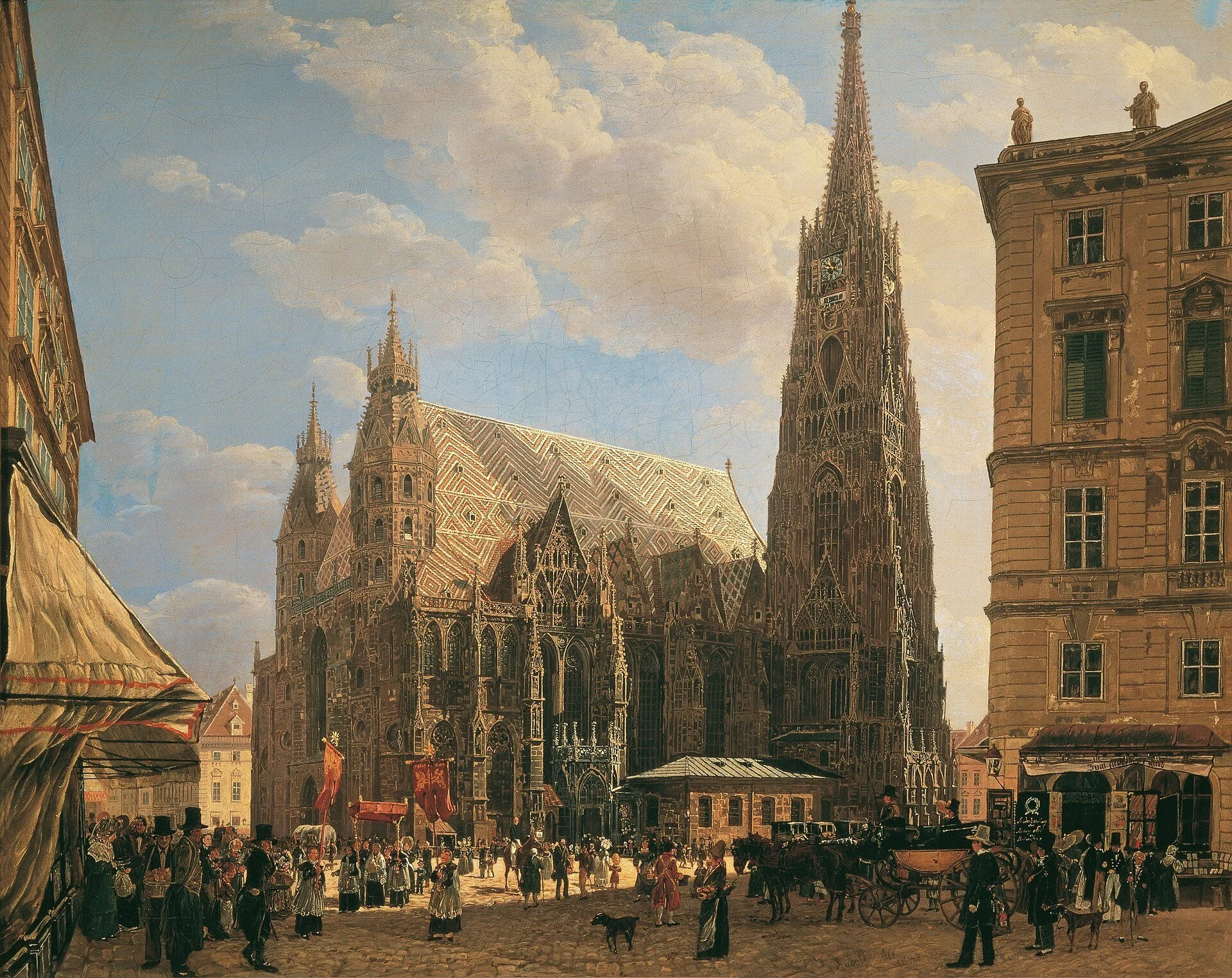
Rudolf von Alt, Der Stephansdom in Wien (1832). Oil on canvas, 46 × 57.5 cm. Upper Belvedere, Vienna. Image courtesy of Wikimedia Commons / Public Domain.
How does Social Class relate to Rudolf von Alt’s Der Stephansdom in Wien?
Take a look at Alt’s depiction of Stephansplatz in Vienna. His work depicts small human figures bustling around the square, such as wealthy gentlemen in black top hats, women in gowns, and elegant horse-drawn carriages. The Innere Stadt (Inner City), where the Stephansdom is, was during the time, the ultra-wealthy, aristocratic, and bourgeois heart of the Habsburg Empire. The low-class workers, who helped to fuel Vienna’s industrialization, were kept contained in the outer suburbs of Vienna. Alt’s painting visualizes this segregation; by showing only wealthy, elegant figures, he isn’t purposely sanitizing the city. Instead, he ends up documenting the playground for the elite. Take a look at the square and notice the church doesn’t stand by itself. It is surrounded by towering, beautiful facades, keeping the wealthy in, and the poor out.
